
Airline Executive Airport List: Hub Selection and Globe Locations
Airline Executive features over 1,100 real airports distributed across a live 3D globe. Players establish a starting headquarters, purchase secondary destinations such as Kansas City or Heathrow, and connect them using customized flight paths to generate passenger revenue.
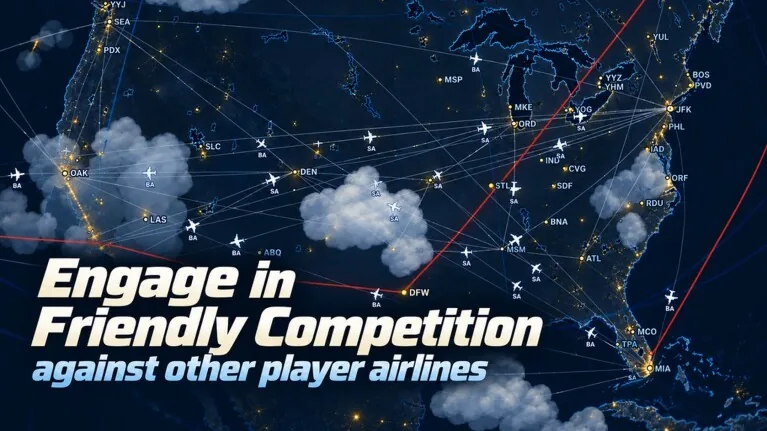
Airline Executive features over 1,100 real airports distributed across a live 3D globe. Players establish a starting headquarters, purchase secondary destinations such as Kansas City or Heathrow, and connect them using customized flight paths to generate passenger revenue.
Global Airport Selection on the 3D Globe
The world map in Airline Executive contains more than 1,100 real-world airport locations created by KnotStupid Studios. When starting a new carrier, players begin with one airport, one of the available used jets, and one million dollars in capital.
Operating any flight requires owning at least two separate terminals. You select your initial base on the 3D globe to act as your headquarters, but your aircraft cannot generate income while sitting at a solitary base. Once you buy airports in other regions, you draw direct flight corridors between them with your mouse. Flight progress moves across real cities and time zones at 60X simulated speed.
Confirmed Airport Locations and Setup Costs
Airport prices vary depending on regional classification and size. Early expansion requires monitoring your balance sheet carefully so you do not run out of funds before launching a route. In a gameplay test by James YouTube, setting up an initial domestic route required locating a secondary destination priced under 1.5 million dollars.
| Airport Location | Operational Fit | Documented Requirement |
|---|---|---|
| Atlanta | Primary starting headquarters | Available within initial starting funds |
| Kansas City | Short-range domestic connection | Purchased for under 1.5 million dollars |
| London Heathrow | Long-haul transatlantic flights | Paired with wide-body aircraft range |
| Rome | European route expansion | Assigned to long-range aircraft |
Selecting the best starting airport sets the foundation for your domestic network. Starting in a high-density area gives multiple nearby options to connect, whereas choosing isolated destinations increases route distance and fuel consumption.
Managing Hub Networks and Route Connections
Expanding your airport list influences how your schedule operates. Players can adopt a centralized hub-and-spoke system, directing all incoming and outgoing aircraft through a single primary airport like Atlanta or Dubai, or establish regional point-to-point connections between hubs like Los Angeles and Seattle.
Effective route planning depends on balancing airport acquisition costs with passenger ticket pricing. Pop-up events and Air News alerts also inform pilots about conditions at specific destinations, requiring managers to adjust service if disruptions occur in overseas territories.
Fleet Growth and Airport Milestone Tracking
Acquiring additional airports directly raises your corporate value on the global leaderboard, which ranks the top 100 airlines in the server by net worth, active fleet size, route count, and total airports owned. Establishing your first five operational connections unlocks the First 5 Routes badge. As earnings accumulate from ticket sales, carriers can expand outward from modest regional airfields to major international hubs across Europe and North America.
Related Guides
Badges List
Review the complete list of official Airline Executive badges on Roblox, including testing milestones, developer encounters, and airline progression requirements.
Beginner Guide
Learn how to set up your first route, manage staff morale, and expand your fleet in Airline Executive without going broke.