
Airline Executive Route Planning: Setting Up Profitable Networks
Airline Executive route planning requires selecting an initial hub airport, purchasing a destination, and connecting them across the 3D globe with assigned aircraft. Balancing route distance against plane condition and passenger pricing determines how quickly flight income expands your fleet.
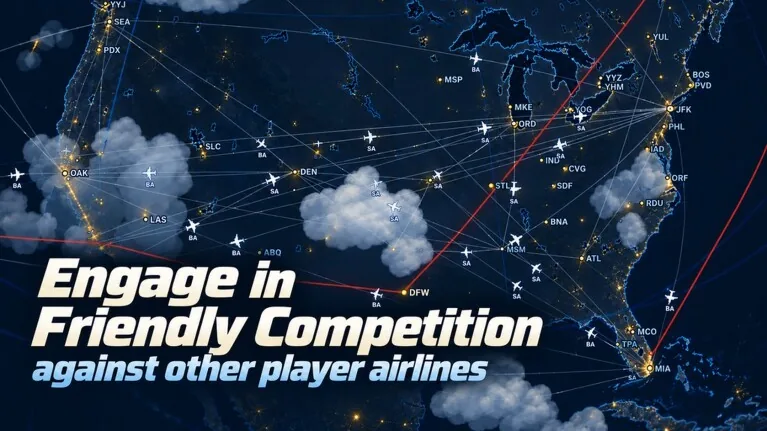
Airline Executive route planning requires selecting an initial hub airport, purchasing a destination, and connecting them across the 3D globe with assigned aircraft. Balancing route distance against plane condition and passenger pricing determines how quickly flight income expands your fleet.
Initial Network Setup and Hub Selection
In the Roblox management experience by KnotStupid Studios, network expansion begins immediately after naming your carrier. Starting capital consists of one used jet, one starting airport, and one million dollars. Selecting your primary hub acts as the anchor for every connection you make on the interactive 3D globe.
Setting up a functional flight path requires a second destination. You must buy airports across the map to establish your initial link. In a gameplay video by creator James, establishing an initial headquarters in Atlanta and securing a secondary domestic destination like Kansas City required selecting an airport priced under 1.5 million dollars. Once two airports are unlocked, drawing a flight line between them with your mouse activates the route for an assigned aircraft.
Balancing Distance, Aircraft Types, and Expenses
Matching plane capabilities to route length directly dictates operating margins. Flights operate at 60X simulated time, meaning flight progress and fuel consumption occur in accelerated real-time intervals. Placing used jets like an older Boeing 737-200 on short domestic hops generates quick flight returns, while larger wide-body aircraft handle long-distance international legs.
| Route Structure | Operational Setup | Associated Costs |
|---|---|---|
| Domestic Short-Haul | Regional connection such as Atlanta to Kansas City using a Boeing 737-200 | Lower destination airport fees under 1.5 million dollars and shorter turnarounds |
| Long-Haul Transatlantic | Continental crossing such as Atlanta to London Heathrow using an Airbus A350 | Higher destination entry costs and longer airborne transit durations |
| Secondary International | Mid-range international link such as Atlanta to Rome using an Airbus A330 | Increased exposure to fuel price fluctuations and higher pilot wage tiers |
Selecting the correct aircraft tier prevents premature operational stalls. Older regional planes offer lower entry costs but display initial wear, such as a 65 percent condition rating, requiring steady oversight to prevent regulatory groundings. Long-range routes between continents require modern wide-body airliners capable of carrying large passenger manifests across day and night cycles.
Operating Hub-and-Spoke Networks
Players expanding past their initial routes frequently run a centralized hub structure. Instead of purchasing point-to-point connections between non-hub cities like Los Angeles and Seattle, funneling flights back into a central airport mirrors the operational models of global legacy carriers.
Centralizing operations around a primary headquarters simplifies scheduling and route additions. As your fleet expands toward ten or more aircraft, adding multi stop routes or new spoke destinations keeps all active planes cycling through known facilities. When selecting new destinations from the catalog of over 1,100 real-world airports, consider how distance influences total flight duration and cash turnover rate.
Managing Flight Variables, Pricing, and Morale
Setting competitive ticket prices represents an ongoing balance between route volume and net profit. Cheap fares fill aircraft seats quickly, but lower margins reduce your ability to absorb fluctuating fuel rates, which change by the minute. Monitoring operational readouts provides data on current passengers, individual tail numbers, route progression percentages, airframe condition, and tailwinds.
Route performance also relies on staffing satisfaction and pilot expertise. Managing staff morale through pop-up investment opportunities directly impacts workforce stability, with approvals boosting employee happiness above 90 percent. Maintaining high morale prevents disruptions while your active fleet crosses global flight paths, allowing individual flight payouts to regularly fund subsequent airport purchases.