
Airline Executive Bankruptcy Causes and Fleet Solvency Guide
Airline Executive bankruptcy ends your carrier when cash reserves collapse under operating pressures like sudden fuel spikes, fleet crashes, and labor strikes. Managing your initial one million dollars while balancing ticket prices and aircraft maintenance keeps your company profitable on the global leaderboard.
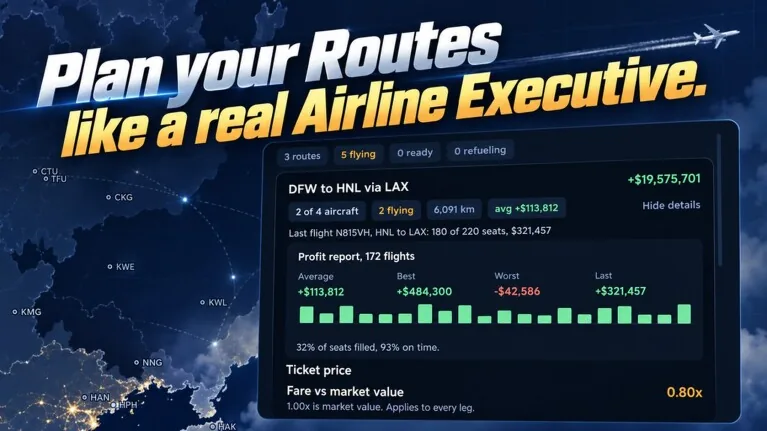
Airline Executive bankruptcy ends your carrier when cash reserves collapse under operating pressures like sudden fuel spikes, fleet crashes, and labor strikes. Managing your initial one million dollars while balancing ticket prices and aircraft maintenance keeps your company profitable on the global leaderboard.
Primary Causes of Financial Collapse
Founding a carrier in Airline Executive begins with one airport, one used aircraft, and a single budget reserve of starting money set at one million dollars. Every round operates under 60X Simulated Time, meaning cash flow shifts rapidly within minutes of live play.
Running out of capital triggers insolvency when operational outflows exceed revenue from ticket sales. The game lists multiple direct financial threats that drain cash reserves:
- Rapid fuel price shifts: Fuel prices adjust by the minute. Setting rigid budgets without cash buffers leaves flights vulnerable when fuel spikes occur mid-transit.
- Deferred repairs on aging airframes: Operating used jets lowers entry costs, but older aircraft require active upkeep. Regulators issue grounding orders if servicing is neglected, halting cash flow while overhead accumulates.
- Uncontrolled operational emergencies: Severe events such as crashes generate negative headlines and severe capital losses.
- Labor walkouts: Ignoring company culture and staff morale triggers strikes, grounding flights across connected hubs.
- Thin profit margins: While discounting seats fills cabins quickly, low ticket fares eat into gross profit, leaving insufficient margin to survive sudden market fluctuations.
Operational Trade-Offs and Solvency Risks
Every operational decision balances immediate passenger numbers against long-term solvency. The table below outlines financial strategies against their specific operational costs based on official mechanics.
| Strategy Option | Operational Purpose | Financial Risk |
|---|---|---|
| Low ticket pricing | Maximizes occupied seats on drawn routes | Compresses operating margins during fuel price spikes |
| Used aircraft purchases | Minimizes upfront spending from initial capital | Demands frequent maintenance or risks regulatory groundings |
| Active airframe maintenance | Avoids fleet grounding and safety incidents | Consistently consumes liquid cash reserves during fast simulation cycles |
Managing Running Costs Under 60X Simulation Speed
Because the game compresses time by a factor of sixty, financial missteps compound before quarterly adjustments can be made. New routes drawn on the 3D globe incur immediate route overhead across the server's network of over 1,100 airports.
To prevent sudden insolvency, carriers must actively schedule maintenance before regulatory bodies step in. Grounded planes produce zero ticket revenue while still occupying gate slots and tied assets. Simultaneously, balancing fare pricing ensures flights generate sufficient profit cushions to absorb minute-by-minute fuel cost increases. Maintaining healthy company cash reserves protects your standing as you compete against the server's top 100 carriers measured by fleet size and total net worth.
Related Guides
Fuel Prices
Understand shifting minute-by-minute fuel expenses in Airline Executive to adjust ticket pricing and keep your airline solvent against sudden operating spikes.
Make Money
Build profitable flight routes, manage fuel and maintenance expenses, and grow your airline balance in Airline Executive.