
Airline Executive Ticket Prices and Profit Margins
Setting ticket prices in Airline Executive directly impacts seat occupancy and revenue margins, where cheap fares quickly fill seats on your flights but reduce overall operational profit against fluctuating fuel costs.
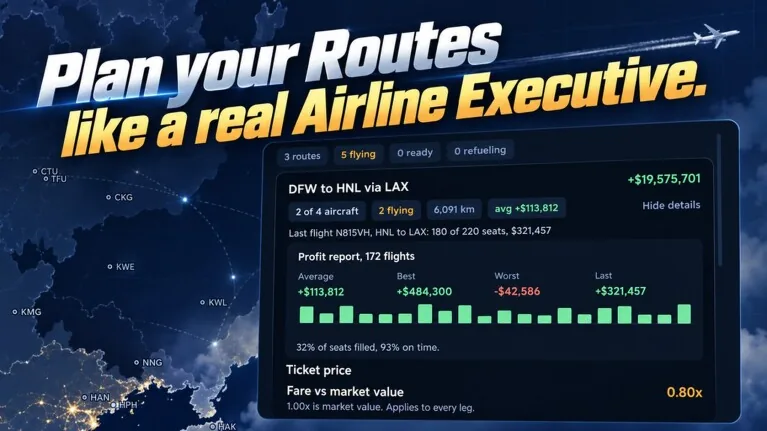
Setting ticket prices in Airline Executive directly impacts seat occupancy and revenue margins, where cheap fares quickly fill seats on your flights but reduce overall operational profit against fluctuating fuel costs.
How Ticket Pricing Affects Flight Operations
When establishing flight connections across the live 3D globe, you draw flight paths with the mouse and set fares for each departure. The simulation operates at 60X Simulated Time, meaning revenue, seat sales, and operating expenses process rapidly. Every scheduled flight represents an ongoing balance between seat occupancy and net margins.
Lower ticket prices attract passengers quickly and ensure aircraft do not fly with empty cabins. However, the game's official details emphasize that cheap fares eat away at margins. Because flights generate income on an accelerated clock, setting rates too low can cause your balance sheet to bleed cash if operational overhead rises unexpectedly.
Fare Strategies and Flight Occupancy
Managing ticket pricing requires adjusting expectations based on route demand, fleet upkeep, and prevailing market conditions.
| Fare Strategy | Target Outcome | Operational Risk |
|---|---|---|
| Low Ticket Prices | Rapidly fills passenger seats on active flights | Drastically lowers profit margins during operating cost spikes |
| Standard Ticket Prices | Balances flight occupancy with sustainable margins | Vulnerable to passenger drops if route demand shifts |
Selecting the right rate depends heavily on how you approach route planning across the 1,100+ airports available in the game. Setting prices without factoring in underlying flight expenses can quickly diminish your company balance sheet.
Balancing Fares Against Operating Costs
Ticket revenue cannot be managed in isolation from your recurring expenses. In the game, fuel prices change by the minute, introducing constant volatility to flight margins. A ticket fare that produces positive cash flow during low fuel costs can become unprofitable the moment a fuel spike occurs.
Fleet condition also directly influences financial sustainability. Starting carriers begin with one airport, a single million-dollar cash reserve, and a fleet consisting of used jets. Older planes require steady maintenance to prevent regulatory groundings or catastrophic incidents. Skipping maintenance saves short-term cash, but regulators will ground neglected planes and generate public headlines.
If ticket revenue fails to cover ongoing maintenance, staff payroll, and volatile fuel charges, carriers face mounting losses that can end in complete bankruptcy. Monitoring fare yields against live expense fluctuations ensures that each aircraft generates sufficient surplus to sustain your airline network.